Why AI Employees Will Replace 20+ Business Tools by 2027
By SmartPromptIQ Team

The Era of “SaaS Sprawl” is Coming to an End
If you look at the monthly credit card statement for an average mid-sized business today, you will likely see a graveyard of software subscriptions. There is a tool for email marketing, another for customer relationship management (CRM), a third for social media scheduling, a fourth for project management, and a fifth just to make the first four talk to each other. This phenomenon, known in the industry as “SaaS sprawl,” has reached a breaking point.
According to recent industry data, the average company now uses over 106 different Software as a Service (SaaS) applications, with enterprise firms averaging well over 400. Yet, despite spending thousands of dollars per employee on these tools annually, productivity has stagnated. The tools require constant human intervention, manual data entry, and endless context-switching.
But a massive shift is on the horizon. By 2027, the fragmented landscape of single-purpose software tools will be largely replaced by something entirely different: autonomous AI employees. We are moving away from buying tools that humans must operate, and moving toward hiring digital workers that operate the business for us. This transition is not just a technological upgrade; it is a fundamental reimagining of how work gets done.
The Hidden Cost of Software Overload
To understand why AI employees are poised to take over, we first have to look at why the current SaaS model is failing businesses. The promise of SaaS was simple: pay a monthly fee for a tool that solves a specific problem. But as companies adopted more tools to solve more problems, they created a new, more complex issue.
Data silos emerged. Employees now spend an estimated 20% of their week just searching for information across different platforms or copying data from one system to another. Furthermore, Zylo’s research on SaaS sprawl highlights that a significant portion of software licenses go completely unused, resulting in massive financial waste. Organizations are paying for seats that remain empty and features that are never activated.
The traditional software model requires humans to act as the glue between disparate systems. If a lead comes in through a website form, a human must often review it, tag it in the CRM, draft an email, and schedule a follow-up task. The software is merely a passive receptacle for human effort.
Enter the Agentic AI Workforce
This is where agentic AI changes the equation. Unlike traditional software, which waits for a human to click a button, an AI agent is autonomous. It can perceive its environment, make decisions based on parameters, and execute complex, multi-step workflows without supervision.
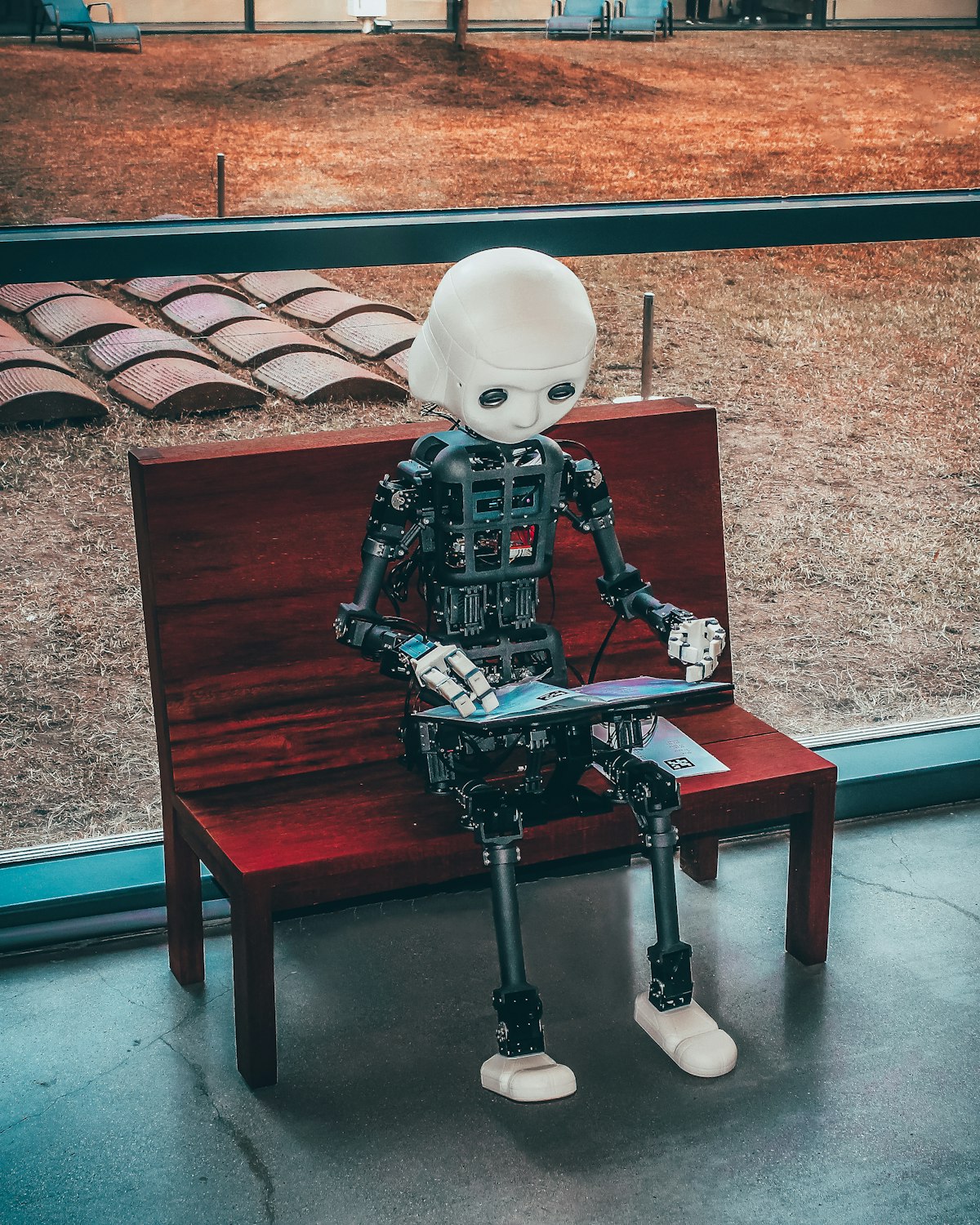
When you deploy a digital worker from platforms like AI Staff, you are not buying a tool; you are hiring a capability. For example, an AI Marketing Manager does not just provide a dashboard for you to schedule posts. It actively researches trending topics, drafts the content, generates accompanying images, and publishes the posts at optimal times. It replaces the social media scheduling tool, the copywriting software, and the analytics dashboard all at once.
This shift is already being recognized by major research firms. Gartner predicts that by 2030, 35% of point-product SaaS tools will be replaced by AI agents or absorbed within larger agent ecosystems. We believe this timeline is actually too conservative. For small and medium-sized businesses, the transition will happen much faster, peaking around 2027.
20+ Tools That Will Disappear
To make this concrete, let us look at the specific types of software that are most vulnerable to being replaced by AI employees in the next two to three years.
| Traditional SaaS Category | Examples of Tools | The AI Employee Replacement |
|---|---|---|
| Social Media Schedulers | Hootsuite, Buffer, Sprout Social | AI Marketing Manager (Drafts & posts autonomously) |
| Basic Customer Support | Zendesk, Intercom (Tier 1) | AI Support Agent (Resolves tickets, processes refunds) |
| Data Entry & Extraction | Zapier, Make, Docuparser | AI Operations Specialist (Reads docs, updates databases) |
| Copywriting Assistants | Jasper, Copy.ai, Grammarly | AI Content Writer (Generates full campaigns on brand) |
| Sales Prospecting | ZoomInfo, Apollo, Reply.io | AI SDR (Finds leads, drafts personalized outreach) |
The common thread among all these vulnerable tools is that they require human operation. They are essentially digital blank slates. In contrast, an AI employee comes pre-trained with the skills necessary to execute the workflow from start to finish.
If you want to build these autonomous workflows yourself, platforms like SmartPromptIQ provide the foundational education and BuilderIQ™ blueprints needed to design custom agentic systems. By mastering prompt engineering and system architecture, businesses can create bespoke digital workers tailored to their exact operational needs.
The Economics of Digital Labor
The financial argument for replacing SaaS with AI employees is overwhelming. When a company subscribes to 20 different software tools, they are paying for the privilege of doing the work themselves. They pay the subscription fee, and then they pay the human salary required to operate the software.
According to Bain & Company’s analysis of agentic AI, these systems are fundamentally disrupting the software-as-a-service business model by replicating entire workflows. Instead of paying $50 a month for a tool and $5,000 a month for the employee to use it, businesses will pay a fraction of that total cost for an AI agent that operates 24/7 without fatigue.
This shift will lead to massive consolidation. A unified platform that manages digital employees, such as the SmartOps Dashboard, will become the central nervous system of the modern enterprise. Instead of logging into a dozen different apps, human managers will log into a single dashboard to review the output of their AI team, approve critical decisions, and set strategic goals.
The Rise of Specialized AI Marketplaces
As the demand for digital workers grows, we will see the emergence of specialized marketplaces where businesses can “hire” pre-trained agents for specific tasks. Much like an app store for digital labor, platforms like SmartPromptAgents will allow companies to browse, select, and deploy AI employees in minutes.
Need an agent trained specifically in e-commerce inventory management? Hire it. Need an agent that understands the nuances of B2B lead generation in the healthcare sector? Download it. These agents will come equipped with the necessary integrations, prompts, and behavioral guardrails to start working immediately.
This marketplace model is fundamentally different from the SaaS model. You are not evaluating features and user interfaces; you are evaluating skills and performance outcomes. Deloitte Insights predicts that this shift will force SaaS vendors to move away from seat-based pricing toward outcome-based pricing, where customers pay for the value the AI generates rather than the software access itself.
Education is the Bridge to the Future
The transition from software operators to AI managers requires a significant shift in human skills. The employees of tomorrow will not be valued for their ability to navigate complex software interfaces or execute repetitive tasks. Instead, they will be valued for their strategic thinking, creativity, and ability to direct AI systems effectively.

This is why educational initiatives are critical. Institutions partnering with platforms like AcademyIQ are already training the next generation of professionals in prompt engineering, AI orchestration, and system architecture. Understanding how to communicate with and constrain AI agents is rapidly becoming the most important technical skill of the decade.
Even in highly specialized fields, the impact is being felt. For instance, in the world of finance and trading, platforms like SmartProTradeIQ are using AI coaching to accelerate the learning curve, moving users from simulation to live trading with unprecedented speed. The AI does not just provide a tool; it provides mentorship and analysis that would traditionally require a human expert.
Physical Production and AI Integration
The replacement of traditional tools by AI is not limited to digital workflows. The intersection of artificial intelligence and physical production is creating entirely new business models. In the manufacturing and design sectors, the friction between digital ideation and physical creation is disappearing.
Consider the innovations happening at Impossible Print Studio. By combining AI-generated assets with automated print-on-demand infrastructure, the traditional bottlenecks of graphic design software, file formatting, and manual print preparation are bypassed entirely. An AI agent can receive a creative brief, generate the high-resolution assets, format them for specific physical dimensions, and route them directly to the printers without human intervention.
This is the ultimate promise of the agentic era: the seamless execution of ideas into reality, whether that reality is a published blog post, a closed sales deal, or a physical product shipped to a customer. AlixPartners notes that AI-native competitors operating with leaner, automated business models will easily undercut traditional firms burdened by heavy software and manual labor costs.
Preparing for 2027
The sunset of the SaaS sprawl era is a welcome development for businesses drowning in subscription fees and data silos. By 2027, the question will no longer be, “What software tool should we buy for this problem?” The question will be, “Which AI employee should we hire for this role?”
Companies that recognize this shift today have a distinct advantage. They can begin auditing their current software stack, identifying workflows that are ripe for automation, and gradually deploying digital workers to take over repetitive tasks. They can invest in educating their human workforce to manage these new AI systems effectively.
We are moving from a world of passive tools to a world of active partners. It is time to say goodbye to the software subscriptions that slow you down, and hello to the AI employees that will scale your business indefinitely.