In February 2026, a quiet panic rippled through Wall Street. In a single, devastating trading session, approximately $285 billion in market value vanished from major software stocks. Giants like ServiceNow dropped 7%, Salesforce slid 7%, and companies like LegalZoom plummeted nearly 20%. The catalyst wasn’t a sudden macroeconomic recession or a regulatory crackdown. It was the realization that the software-as-a-service (SaaS) business model—which has powered a $300 billion industry for over two decades—is fundamentally breaking.
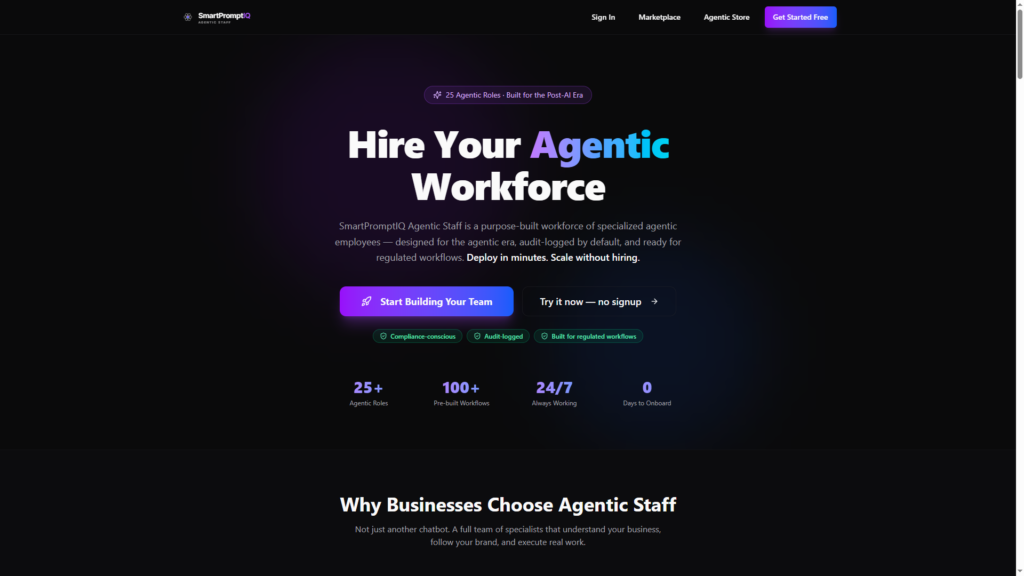
For twenty years, the playbook for growing a business was simple: identify a problem, buy a point-solution SaaS tool, and pay a monthly subscription fee per user. Need project management? Buy Jira or Asana. Need email marketing? Subscribe to Mailchimp. Need customer support? Pay for Zendesk or Intercom. Today, the average enterprise manages over 600 individual SaaS applications, spending a staggering $280 million annually on software subscriptions.
“The very notion that business applications exist will collapse in the agentic AI era. Business applications are essentially CRUD databases with business logic that will migrate entirely into the AI tier.”
— Satya Nadella, CEO of Microsoft
By 2027, this fragmented, hyper-expensive ecosystem will be obsolete. We are rapidly transitioning from the “one tool per task” era to the “one agent per outcome” era. Traditional software is being cannibalized by autonomous AI employees—intelligent agents capable of reasoning, planning, and executing complex workflows across multiple systems without human intervention. Here is why the SaaS era is coming to a dramatic end, and why AI employees will replace over 20 of your favorite business tools by 2027.
The Death of the Per-Seat Pricing Model
The entire SaaS economy is built on a simple, database-centric equation: more employees using software equals more revenue. Per-seat licensing worked beautifully when every new human hire required their own login, dashboard, and license. It aligned the software vendor’s growth directly with the customer’s headcount growth.
AI employees invert this equation entirely. When a single human operator equipped with an autonomous AI agent can accomplish the work of five or ten people, the company no longer needs to buy dozens of seats. A recent Deloitte Insights Report predicts that by 2030, at least 40% of enterprise SaaS spend will shift away from per-seat subscriptions toward usage-, agent-, or outcome-based pricing. When software value is measured by tasks completed rather than logins granted, the per-seat model collapses. SaaS vendors are watching their revenue per customer compress, not because their software is failing, but because AI is making their customers too efficient.
| Dimension | Traditional SaaS Model (2006–2025) | Autonomous AI Employee Model (2026+) |
|---|---|---|
| Pricing Structure | Pay per seat/user (Scales with headcount) | Pay per outcome/task (Scales with results) |
| Integration Level | Siloed tools connected via complex, manual APIs | Unified orchestration across all systems of record |
| User Interface | Graphical User Interfaces (GUIs) requiring clicks | Natural Language Interfaces (LUI) and “headless” APIs |
| Execution | Human must trigger, navigate, and execute every action | Agent acts autonomously to achieve a high-level goal |
| Operational Speed | Limited by human processing and clicking speed | Near-instantaneous API execution in parallel |
How AI Agents Are Dismantling the SaaS Stack
To understand why 20+ tools will disappear, we must look at the architectural shift occurring in enterprise tech. Traditional SaaS applications are essentially pretty interfaces wrapped around databases. They require humans to log in, read data, make a decision, and click buttons to execute a task.
AI employees, by contrast, bypass the user interface entirely. They interact directly with databases and APIs. They don’t need a project management dashboard to track a task, an email builder to send a campaign, or a CRM form to update a lead. They perform these actions in the background. As highlighted in Glean’s Analysis on Enterprise AI, AI agents are becoming the new operating layer of work, rendering point-solution software interfaces completely invisible.
This “agentification” is already happening in three distinct phases:
- The Compression Phase: Companies consolidate their software stacks, replacing dozens of niche, single-purpose SaaS tools with a single AI orchestration platform.
- The Headless Phase: Traditional graphical interfaces disappear. Employees interact with their tech stack via chat, voice, or Slack, while AI agents execute commands across systems in the background.
- The Autonomous Phase: AI employees operate independently, managing entire departments (like level-1 customer support or outbound lead generation) with minimal human oversight.
The Real-World Proof: The Klarna Paradigm
Skeptics often argue that full software and workforce replacement is a distant fantasy. However, the real-world evidence is already here. Consider the fintech giant Klarna. By implementing an advanced AI assistant, the company achieved what was previously thought impossible.
In its first month of deployment, Klarna’s AI agent handled 2.3 million customer service conversations. It successfully performed the equivalent workload of 700 full-time human customer service agents, resolved issues in less than 2 minutes (down from 11 minutes), maintained identical customer satisfaction scores, and is on track to secure millions in annual operational savings. This single AI deployment effectively dismantled their reliance on multiple customer support, ticketing, translation, and analytics SaaS tools.
While some companies have faced minor friction in over-relying on AI without proper guardrails, the economic incentive is too massive to ignore. McKinsey estimates that generative AI will inject up to $4.4 trillion annually into the global economy, primarily by automating the repetitive cognitive tasks that traditional SaaS was built to manage.
The 20+ SaaS Tools on the Chopping Block
By 2027, any SaaS tool that relies on probabilistic workflows—tasks involving content creation, basic data entry, scheduling, sorting, or level-1 customer triage—is highly vulnerable to complete replacement. Point-solutions in marketing, project management, sales enablement, and customer support will be the first to go. Gartner predicts that 35% of point-product SaaS tools will be replaced by AI agents or absorbed into broader agentic ecosystems by 2030, with the acceleration peaking in 2027.
Instead of paying for a social media scheduler, an SEO optimizer, a copywriter tool, and an email marketing platform, businesses will hire a single “AI Marketing Employee.” This digital worker will autonomously conduct market research, write copy, generate images, optimize for SEO, schedule posts, and analyze performance across all channels—replacing 5 to 7 tools instantly.
How to Prepare Your Business for the Agentic Era
If you are a business owner, executive, or IT leader, continuing to sign long-term, expensive per-seat SaaS contracts is a dangerous financial liability. To thrive in the agentic era, you must aggressively adapt your software procurement strategy:
- Audit Your SaaS Stack: Identify every single-purpose point-solution tool your company currently pays for. Ask: “Could an autonomous agent connected to our APIs do this job?” If the answer is yes, do not renew those contracts.
- Invest in Systems of Record, Not Systems of Click: Databases, core ERPs, and secure cloud warehouses (like Snowflake or Databricks) are safe. They hold your proprietary data. Focus your budget on securing and structuring your data so that AI employees can access and utilize it safely.
- Shift to Agent-First Workflows: Begin experimenting with open-source and low-code agent builders like n8n, LangChain, or Zapier Agents. Start by automating high-volume, repetitive tasks such as lead scoring, invoice processing, and social media syndication.
Conclusion: The Rise of the Digital Workforce
The transition from SaaS to AI employees is not just a technological upgrade; it is a fundamental restructuring of how businesses operate. The companies that survive and dominate the next decade will not be those with the largest headcount or the most complex software stacks. They will be lean, agile organizations operated by a handful of strategic human leaders orchestrating a highly efficient, infinitely scalable digital workforce of AI employees.
The SaaS era was wonderful while it lasted. But by 2027, the software you buy will no longer be a tool you use—it will be an employee that does the work for you. It’s time to say goodbye to SaaS, and hello to the future.
References
- Orbilon Technologies. (2026). “AI Agents Replacing SaaS Tools: What It Means for 2026”.
- Zylo. (2025). “2025 SaaS Management Index Report”.
- Deloitte Insights. (2025). “SaaS meets AI agents: Transforming budgets, customer experience, and workforce dynamics”.
- Glean. (2025). “Will AI agents replace SaaS? Key insights for 2025”.
- OpenAI. (2024). “Klarna Customer Service AI Assistant Case Study”.
- McKinsey & Company. (2023). “The economic potential of generative AI: The next productivity frontier”.